Govt reiterates support to media sector development
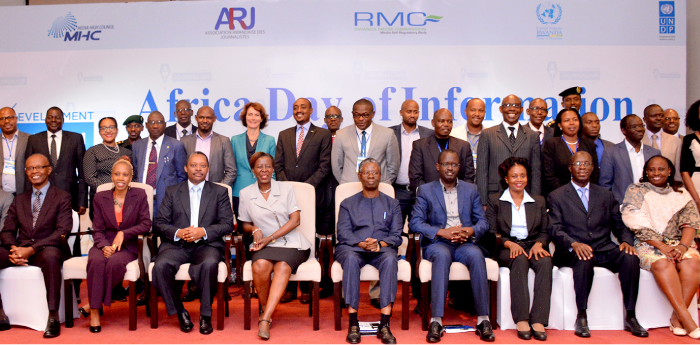
Media stakeholders and Government partners pose for a group pphoto during the Africa Day of Information in Kigali on 7th November 2017 (Photo courtesy: Taarifa.rw)
African Media in the Digital Era dominated the agenda as local and Africa media experts, journalists and government officials met in Kigali to mark the Africa Day of Information that falls on 7th November and for the 9th National Media Dialogue. Speaking at the event, Foreign Affairs, Cooperation and East African Community Minister Hon. Louise Mushikiwabo, emphasized the importance of media in national development. She acknowledged that Rwanda media has come “a long way” and that it has grown both in “quantity and quality”. She pledged continued government support to enable the sector play its role in national development. “Rwanda will continue to work with its media sector development partners and media practitioners to achieve set goals and objectives,” the Minister said. Professor Anastase Shyaka the Chief Executive Officer of Rwanda Governance Board said that the changes resulting from new information and communication technologies are irreversible and that the media industry has to adapt. He noted that the digital revolution has drastically changed the way news is gathered, delivered and consumed. “A growing number of readers, viewers and listeners are going online for their news. This has affected traditional media business like Television around the world is most affected. Print media is the most hit,” said Shyaka. The 2016 Rwanda Media Barometer indicates that the percentage of Rwandans who use social media to get information has gone up from 9.4% in 2013 to 17% in 2016. “With dwindling revenues, some media houses have closed down. It should not be business as usual, there is need to adjust to the inevitable changes” Prof Shyaka said. He encouraged mergers as one of the solutions that can help media houses to stay afloat. He also highlighted the need to put in place measures to deal with abuse of social media platforms to propagate ‘hatred, racism and destructive ideologies.’ Different speakers at the meeting, noted new information and communication technologies should not be seen as a threat to media growth in Africa rather as means to help the continent attain improved socio-economic development.