Nyaruguru and Gisagara leaders enlightened on access to information law
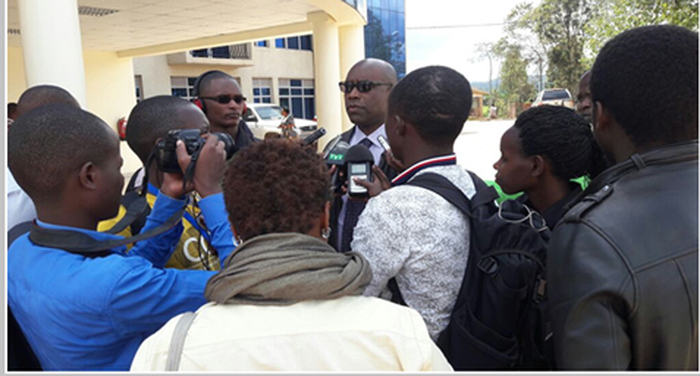
The ongoing media reforms literacy campaigns reached Nyaruguru and Gisagara districts on 13th and 14th December, 2016 respectively. The campaigns, organized by Rwanda Governance Board (RGB) in collaboration with the Ombudsman Office and the Media Self-Regulatory Body are aimed at sensitizing the public on the access to information law and other media reforms undertaken by the Government of Rwanda. The campaigns are targeting district executive committees, executive secretaries, representatives of security organs, sector executive secretaries and journalists.
Speaking at the campaigns, Mr. Gerald MBANDA the head of Media Affairs and Communication Department at RGB, told participants that the access to information law is there primarily to help citizens get information on their country.
“When we talk about the access to information law, some think it only focuses on giving information to the media, it is not like that, the law also allows citizens to get information from institutions” said MBANDA.
“You are representing and heading administrative entities that are involved in several programs and activities of public interest, and the public out there need to know what you are doing for them”
Mr. Gerald MBANDA went on explaining that the access to information law was gazetted in 2013 alongside with other laws geared towards transforming Rwanda’s media sector to enable it play a role in the country’s development and help citizens to have a say in the country’s policies and programs.
This was also echoed by Jean Aimé Kajangana, the Director of the Monitoring of Interdictions and Incompatibilities of Senior Officials and enforcement of the access to information law at the Office of the Ombudsman. He stressed that the access to information law “helps leaders to know how, when to release information, what kind of information should be released and what kind of information should not be released…Not all information should be released, some information should be kept a secret like those about the national security.
Mr. Kajangana told local leaders both in Nyaruguru and Gisagara districts that the access to information law obliges all institutions to put in place an information officer and proactively avail information.
“For example anyone visiting the district should see at notice boards information on requirements to get a land title. Information on staff in a given office, their responsibilities and telephone numbers should be displayed at offices’ doors” explained Mr. Kajangana.
Both the local leaders and journalists participating at the campaigns thanked Rwanda Governance Board and partner institutions for bringing them together in discussions on the access to information law.
“Sometimes we crash with local leaders when we request them to give us information on some matters in their area of administration” said Emmanuel NSHIMIYIMANA
“We local leaders and journalists, work for the good of the people, we should continue to work together to give them the information that they need” said Jerome Rutabingoga the mayor of Gisagara district.
Mr. Kajangana urged local leaders and journalists to read the access to information law and related ministerial orders, because they are clear enough and will help them avoid crashes when it comes to dos, don’ts, responsibilities and prohibitions when it comes to seeking and availing information.
Back