RGB and its partners commemorate the 1994 Genocide Against Tutsi
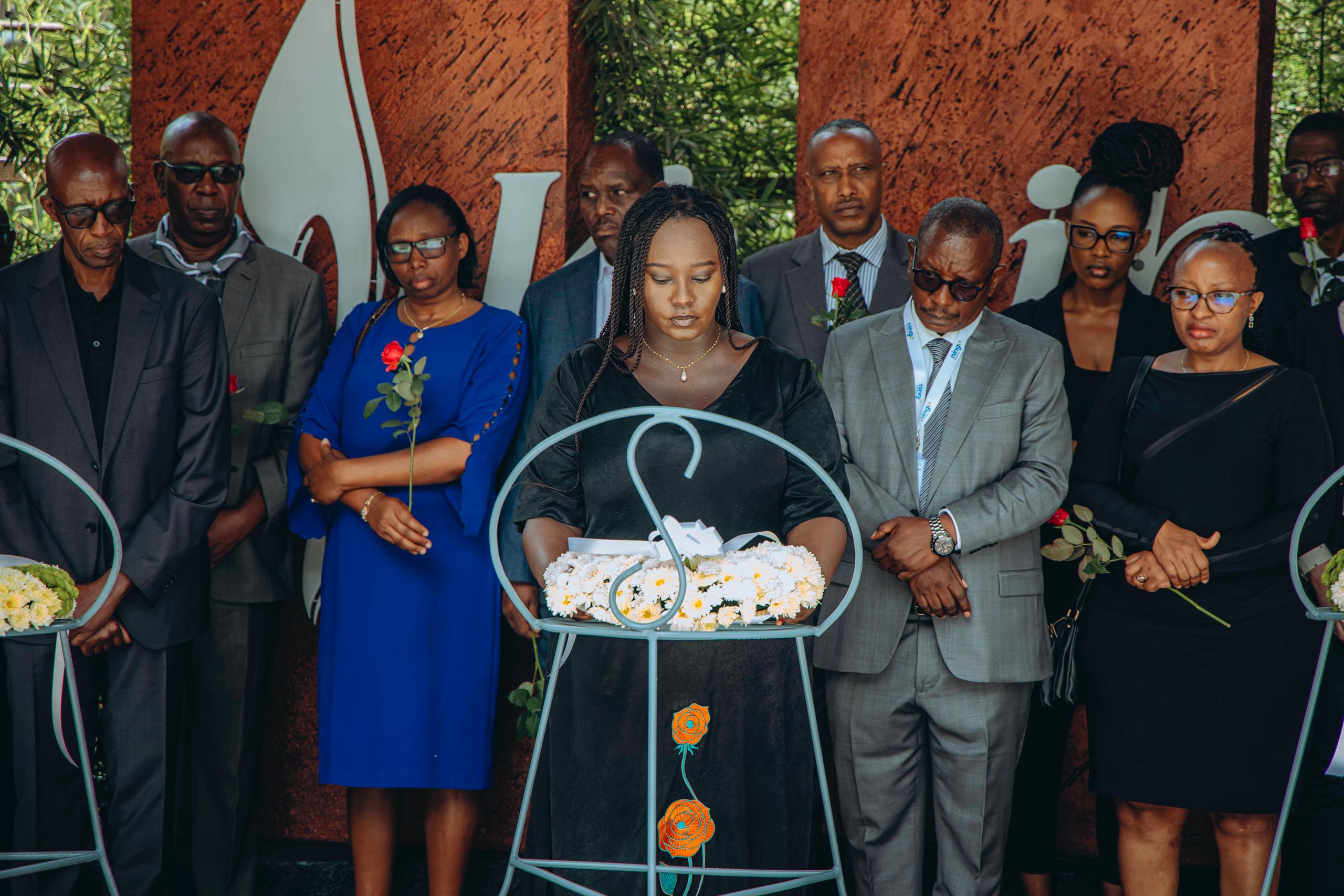
On Frida May 2nd, 2025 at Kigali Genocide Memorial, the Staff and senior managers from Rwanda Governance Board (RGB) in collaboration with the members of Rwanda Civil Society Platform (RCSP), Network of International NGOs (NINGOs) and Rwanda Inter-Religious Council (RIC) came together in remembrance of the victims of the 1994 Genocide Against the Tutsi.
This event started by having a guided tour inside the memorial, where the participants were given a historic insight on the history of Rwanda before and after the 1994 Genocide Against Tusti, and on the key events that sow the seed of divisionism, discrimination, radicalization thus destroying social unity of Rwandans and eventually escalating into the Genocide, leaving the country in total ruins.
As part of the remembrance, the staff visited the Kigali Genocide Memorial, where more than 250,000 victims are laid to rest. There, they laid wreaths in honor of the lives that were brutally taken, and observed a moment of silence.
Following the memorial visit, the team gathered to listen to powerful testimonies from Genocide survivors, accompanied by messages of remembrance and a collective call to uphold peace, unity, and the truth of Rwanda’s history.
In her remarks, the RGB CEO Dr. Doris Uwicyeza Picard appreciated the participants who came from their respective institutions and joined hands in remembrance of the victims of the 1994 Genocide Against the Tutsi.
Having RGB and CSOs come together to organise this event today is a commendable gesture that demonstrates solidarity of CSOs with the people of Rwanda in the fight against the genocide against the Tutsi, its ideology and its denial and as well as dealing with its legacies.
“This event is a powerful expression of solidarity between civil society and the people of Rwanda. Your presence here underscores a critical truth: that the fight against genocide ideology and denial is not the responsibility of the government alone—it is a collective moral imperative, and civil society must be at its forefront” she said.
“Genocide denial is not merely a distortion of history—it is genocide ideology in motion. It is a continuation of the very hate that fueled the killings, now dressed in the language of revisionism, free speech, and even human rights. It seeks not only to erase memory, but to reopen wounds and threaten the fragile fabric of reconciliation” she added.